By Soren Jensen | Landscape Design & Build | Ballard, Seattle
Seattle is one of the most beautiful cities in the country to spend time outdoors — but building a deck here isn't the same as building one in Phoenix or Miami. With over 150 days of rain per year, persistent moisture, mild but gray winters, and the occasional stretch of intense summer sun, Seattle's climate puts decking materials through their paces. Choose the wrong material, and you're looking at warping, rot, mold, and costly repairs within a few years. Choose wisely, and your deck will be a four-season retreat for decades.
At Outdoor Oasis, we've built custom decks throughout Seattle, Ballard, and the greater Puget Sound area, and we've seen firsthand how different materials hold up over time in our climate. Here's what we recommend — and what to watch out for.
Why Seattle's Climate Demands More from Decking
Before diving into materials, it helps to understand what your deck is actually up against. Seattle's climate is defined by:
Persistent moisture. Rain falls steadily from October through May, and even "dry" summers bring morning dew and coastal fog.
Temperature cycling. Mild freezes in winter combined with warm, dry summers cause materials to expand and contract repeatedly, accelerating wear.
Low UV exposure. The Pacific Northwest's overcast skies mean wood dries out more slowly than in sunnier climates, which can promote moss, algae, and mildew growth.
Shade and tree coverage. Many Seattle yards are heavily shaded, creating conditions where moisture lingers even longer.
These factors together mean that moisture resistance, dimensional stability, and mold resistance are the three most important qualities to evaluate in any decking material here.
Option 1: Western Red Cedar — The Classic Pacific Northwest Choice
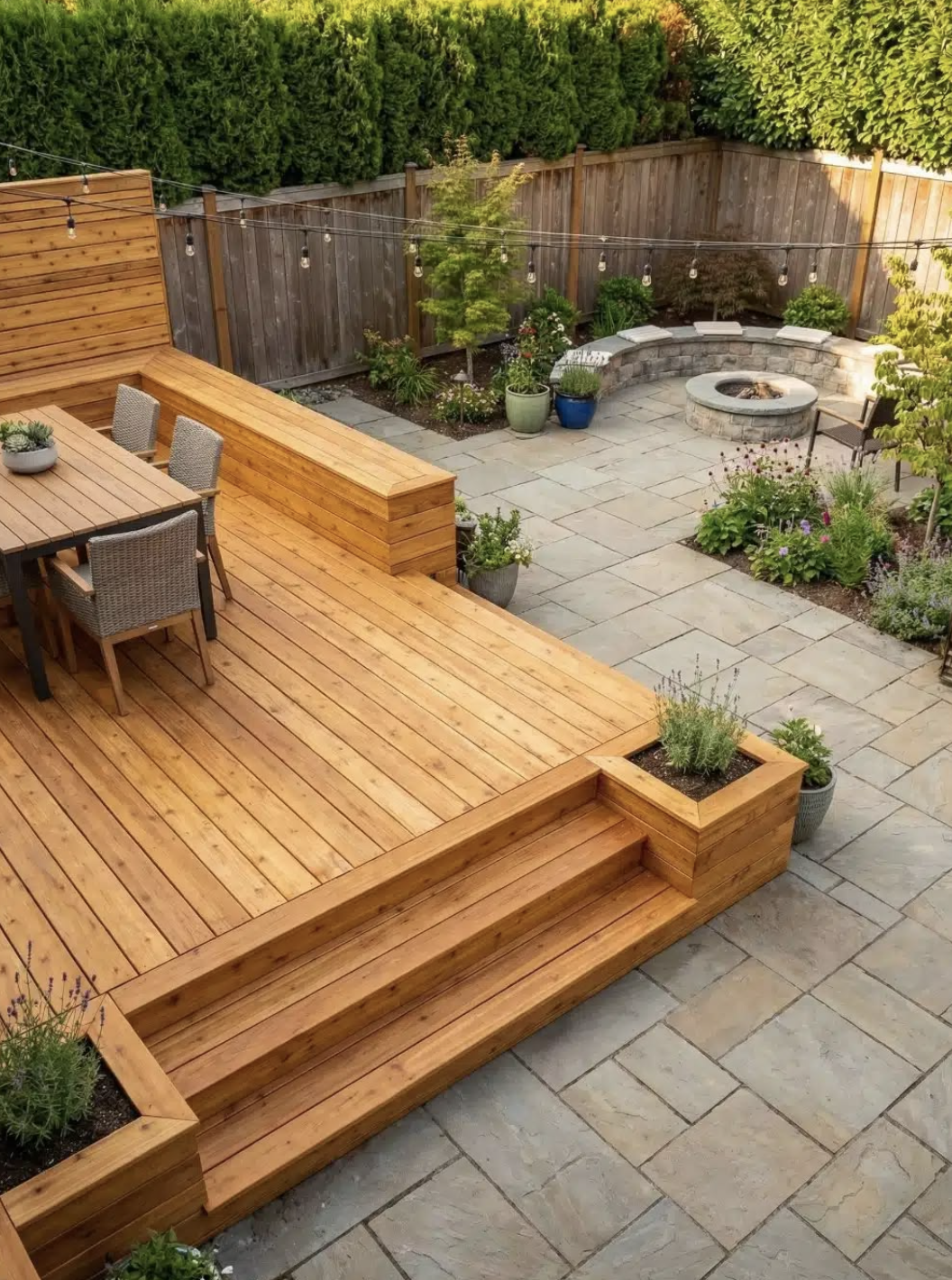
The look of classic cedar with a modern twist.
Best for: Homeowners who want a natural wood aesthetic with good regional performance and a lower cost than exotic hardwoods, artificial (composite and PVC) decking, or sustainable alternative premium decking products.
Western Red Cedar has been used in Pacific Northwest construction for generations — and for good reason. It contains natural oils that make it one of the most moisture- and insect-resistant softwoods available. It's also lightweight, easy to work with, and produces that warm, rich look that defines classic Seattle outdoor spaces.
Pros:
Naturally rot and insect resistant
Lighter weight than many hardwoods
Beautiful grain and color — ages to a distinguished silver-gray if left untreated
Readily available and sourced locally in the Pacific Northwest
More sustainable than many exotic hardwoods
Cons:
Requires regular maintenance (cleaning, sealing, and staining every 2–3 years)
Softer than hardwoods — more susceptible to denting and scratching
Quality varies significantly; lower-grade cedar knots can weaken boards
Our take: Cedar is a fantastic choice when properly maintained. Neglect it, and Seattle's moisture will shorten its lifespan considerably. If you love the look of natural wood and are committed to upkeep, cedar is hard to beat for a classic Pacific Northwest deck.
Option 2: Ipe and Tropical Hardwoods — Premium Performance
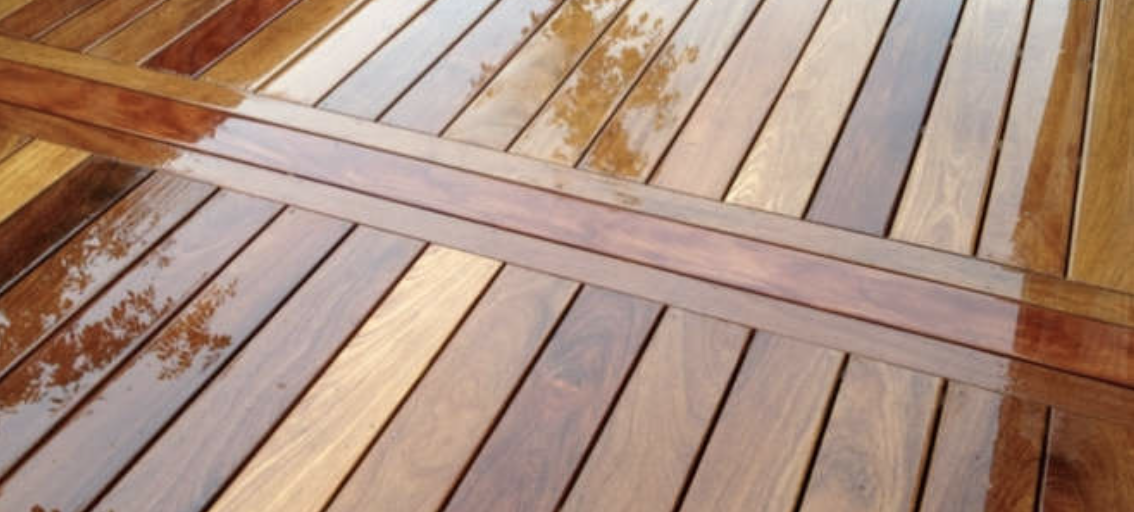
The beauty of tropical hardwoods is only rivaled by premium luxury alternative decking (listed below).
Best for: Homeowners seeking maximum durability and a high-end, architectural look.
Ipe (pronounced "ee-pay") is a Brazilian hardwood so dense it's nearly impervious to moisture, insects, rot, and even fire. It's among the most durable decking materials on the market, with a lifespan that can exceed 40 years in Pacific Northwest conditions when properly maintained. Other tropical hardwoods — such as Cumaru, Garapa, and Tigerwood — offer similar benefits at various price points.
Pros:
Exceptional longevity — one of the longest-lasting natural wood options available
Highly resistant to rot, insects, warping, and mold
Stunning, rich appearance with tight, attractive grain
Low maintenance compared to softer woods
Cons:
Higher upfront cost
Harder to work with during installation — requires pre-drilling and specialized tools
Sustainability concerns vary by source; look for FSC-certified wood
Can become very slippery when wet if left unsealed — important in a rainy climate
Our take: If you want a natural wood deck that performs beautifully in Seattle's climate with less ongoing maintenance, Ipe is an excellent investment. The upfront cost is higher, but the lifespan and appearance more than justify it for many homeowners.
Option 3: Composite Decking — Low Maintenance, High Performance
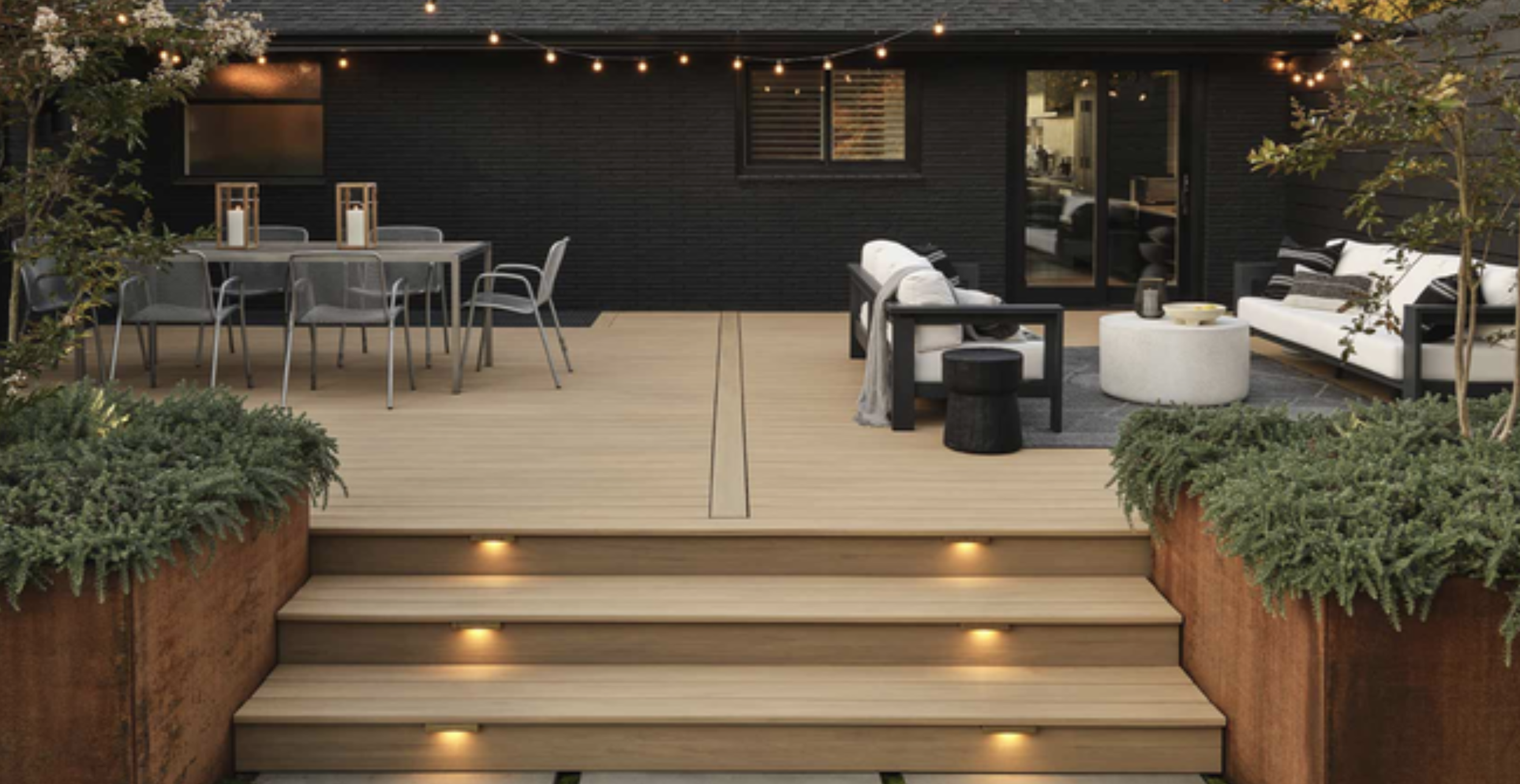
Practical and low maintenance. Composite decking is extremely popular in the pacific northwest.
Best for: Homeowners who want a great-looking deck without the ongoing maintenance commitment.
Composite decking — made from a blend of wood fibers and recycled plastics — has improved enormously over the past decade. Modern composite products from brands like Trex, TimberTech, and Fiberon bear little resemblance to the faded, chalky composites of the early 2000s. Today's composites are engineered to mimic the look of natural wood while offering superior moisture resistance, dimensional stability, and ease of care.
For Seattle homeowners in particular, composite decking has become one of our most commonly recommended options.
Pros:
Highly resistant to moisture, mold, mildew, and rot
No staining, sealing, or sanding required — periodic cleaning is all it needs
Consistent appearance without warping, cracking, or splintering
Available in a wide range of colors and wood-grain textures
Many products carry 25- to 30-year warranties
Cons:
Higher upfront cost than most wood options
Can feel slightly different underfoot than natural wood
Low-end composites can still fade or stain; quality varies significantly by brand
Not as easily repaired as solid wood if individual boards are damaged
Our take: For busy Seattle homeowners who want a beautiful deck that holds up beautifully in the rain without demanding regular upkeep, composite decking is often the smartest long-term investment. We work with several premium composite lines and are happy to walk you through the options.
Option 5: Accoya — Chemically Modified Wood with Exceptional Stability
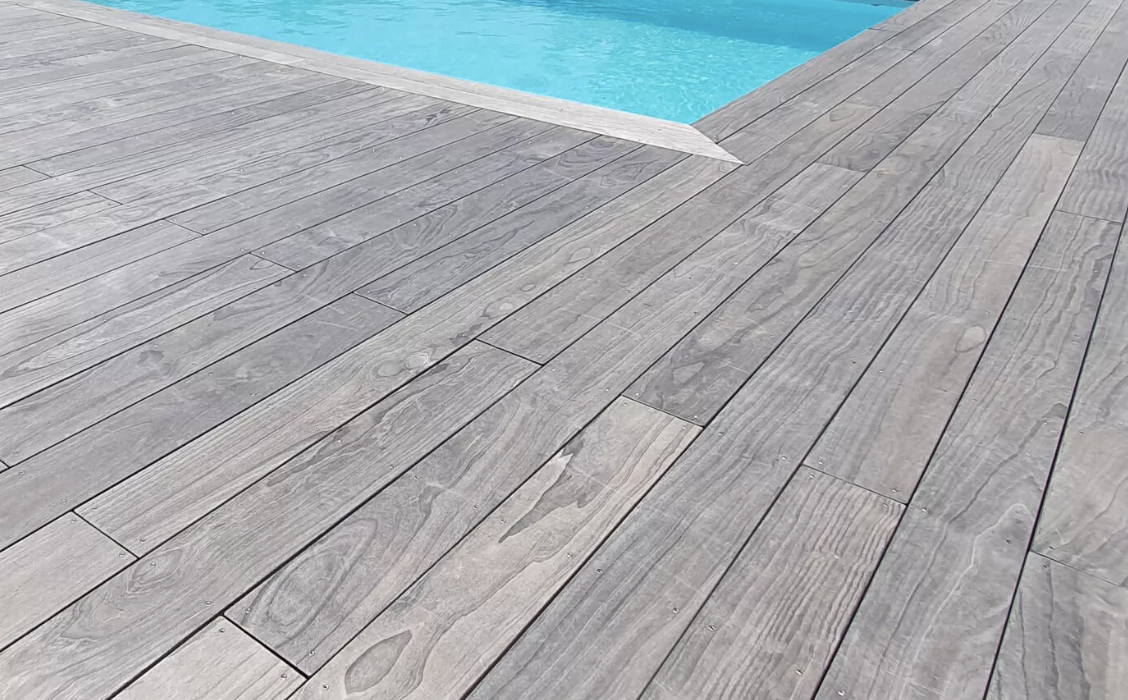
Treated with a vinegar-like solution, Accoya wood decking is incredibly durable, long-lasting, and has a smokey-grey, creamy look to it.
Best for: Homeowners who want the feel and workability of natural wood with dramatically enhanced performance.
Accoya is a radiata pine that has been chemically modified through a process called acetylation — a non-toxic treatment that alters the wood's cellular structure so it can no longer absorb water. The result is a softwood that behaves like a high-end hardwood: it doesn't swell, shrink, or warp with moisture changes, and it becomes highly resistant to rot and decay.
For Seattle's wet climate, Accoya's dimensional stability is one of its most compelling qualities. Most wood species expand and contract as they absorb and release moisture — exactly what Seattle's seasonal swings cause. Accoya largely eliminates that cycle, meaning less gapping, less cupping, and a deck surface that holds its shape year after year.
Pros:
Outstanding dimensional stability — resists swelling, shrinking, and warping
Class 1 durability rating (the highest for rot resistance) — warranted for 25 years in above-ground applications
Takes paint and stain exceptionally well and holds finishes longer than untreated wood
Non-toxic process; safe for use around people, pets, and waterways
Made from sustainably sourced, fast-growing radiata pine
Cons:
Premium price point — comparable to or higher than tropical hardwoods
Lighter in color and less visually dramatic than Ipe or Kebony; relies on finish for aesthetics
Less widely known, so fewer local suppliers compared to cedar or composite
Our take: Accoya is one of the most technically impressive decking materials available for wet climates. If you want a natural wood deck that simply refuses to move with Seattle's moisture swings, and you're willing to invest accordingly, Accoya is worth serious consideration.
Option 6: Kebony — Modified Wood with a Rich, Durable Character
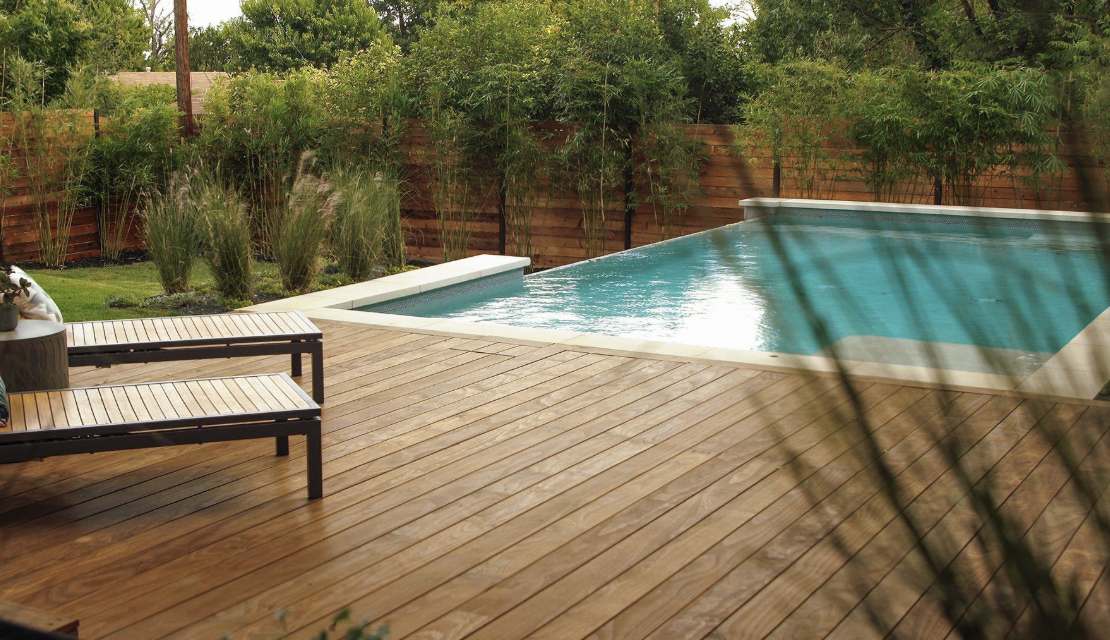
A Kebony deck. The look of natural wood, with none of the eco-related guilt.
Best for: Homeowners who want the beauty of tropical hardwood with a more sustainable profile.
Kebony is a Norwegian-developed modified wood product that takes sustainably sourced softwoods (typically radiata pine or southern yellow pine) and infuses them with furfuryl alcohol — a bio-based liquid derived from agricultural waste — under heat and pressure. This process permanently transforms the wood's cellular structure, boosting its hardness, durability, and weather resistance to rival that of tropical hardwoods.
One of Kebony's most distinctive qualities is its appearance. Fresh Kebony has a warm, rich brown tone that weathers naturally to a beautiful silver-gray patina over time — much like Ipe or Teak — without any treatment required. For Pacific Northwest homeowners who love the aged, weathered look of silver-gray wood, Kebony achieves it gracefully and predictably.
Pros:
Hardness and durability comparable to tropical hardwoods
Weathers to a beautiful, consistent silver-gray patina
Sustainably sourced — carries FSC certification and avoids rainforest timber
Excellent moisture and rot resistance
Class 1 durability — similar outdoor lifespan to Ipe
Easier to work with than dense tropical hardwoods
Cons:
Higher upfront cost than cedar or composite
Less widely stocked than mainstream decking options; may require ordering
Silver-gray weathering is irreversible if that's not the look you want (though it can be slowed with UV oil)
Our take: Kebony hits a sweet spot that few materials do — it looks like a premium tropical hardwood, performs like one, and is produced sustainably. For environmentally conscious homeowners who still want a high-end natural wood aesthetic, it's one of the most compelling options on the market.
Option 7: Dasso / Bamboo Decking — A Renewable, High-Performance Alternative
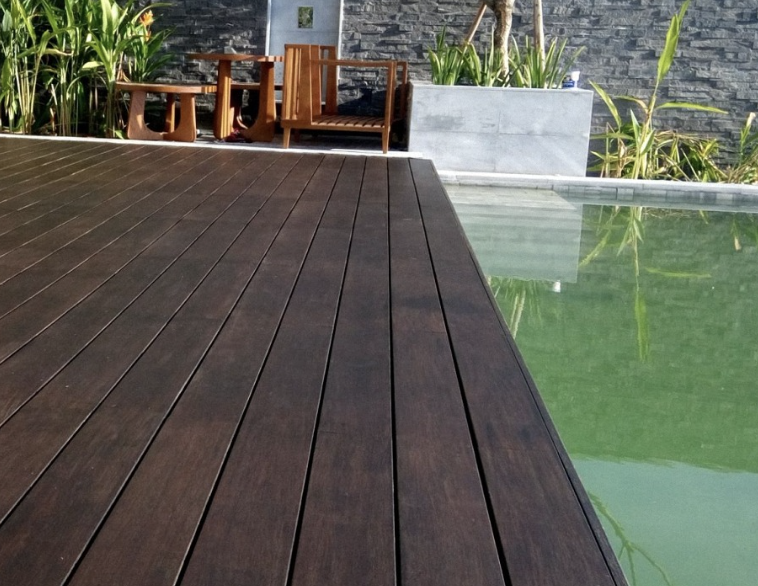
Affordable, durable, and beautiful bamboo decking (technically, made out of grass!).
Best for: Eco-minded homeowners looking for a durable, distinctive deck with a modern aesthetic.
Dasso is one of the leading manufacturers of strand-woven bamboo decking — a material that has come a long way from the soft, splitting bamboo of the early sustainable design movement. Modern strand-woven bamboo is made by shredding bamboo fibers, compressing them under extreme heat and pressure, and binding them with adhesive resins. The result is a board that is harder than most hardwoods and remarkably dense.
Bamboo grows extraordinarily fast — reaching harvestable maturity in as little as five years compared to decades for timber species — making it one of the most renewable decking materials available. Dasso's products are specifically engineered for exterior use and have been tested in a range of climates, including wet Pacific Northwest conditions.
Pros:
Extremely hard and dense — harder than oak, teak, or many tropical hardwoods
Highly renewable — bamboo is one of the fastest-growing plants on earth
Distinctive, contemporary appearance that stands out from traditional wood decks
Good moisture and UV resistance in engineered, exterior-grade products
Resistant to insects
Cons:
Bamboo is not native to the Pacific Northwest, so local sourcing and repair can be harder
Lower-quality bamboo products can delaminate over time, especially in persistently wet conditions — brand and product grade matter enormously
Requires careful installation with appropriate gapping and fastening for outdoor moisture exposure
Aesthetic is modern and specific — not for every home's style
Our take: High-quality strand-woven bamboo like Dasso is a genuinely impressive material, and it's a great conversation piece. In Seattle's climate, we'd emphasize choosing a premium, exterior-rated product and ensuring proper installation. When done right, it's a durable and beautiful choice with real environmental credentials.
Option 8: Thermally Modified Wood — Ancient Science, Modern Performance
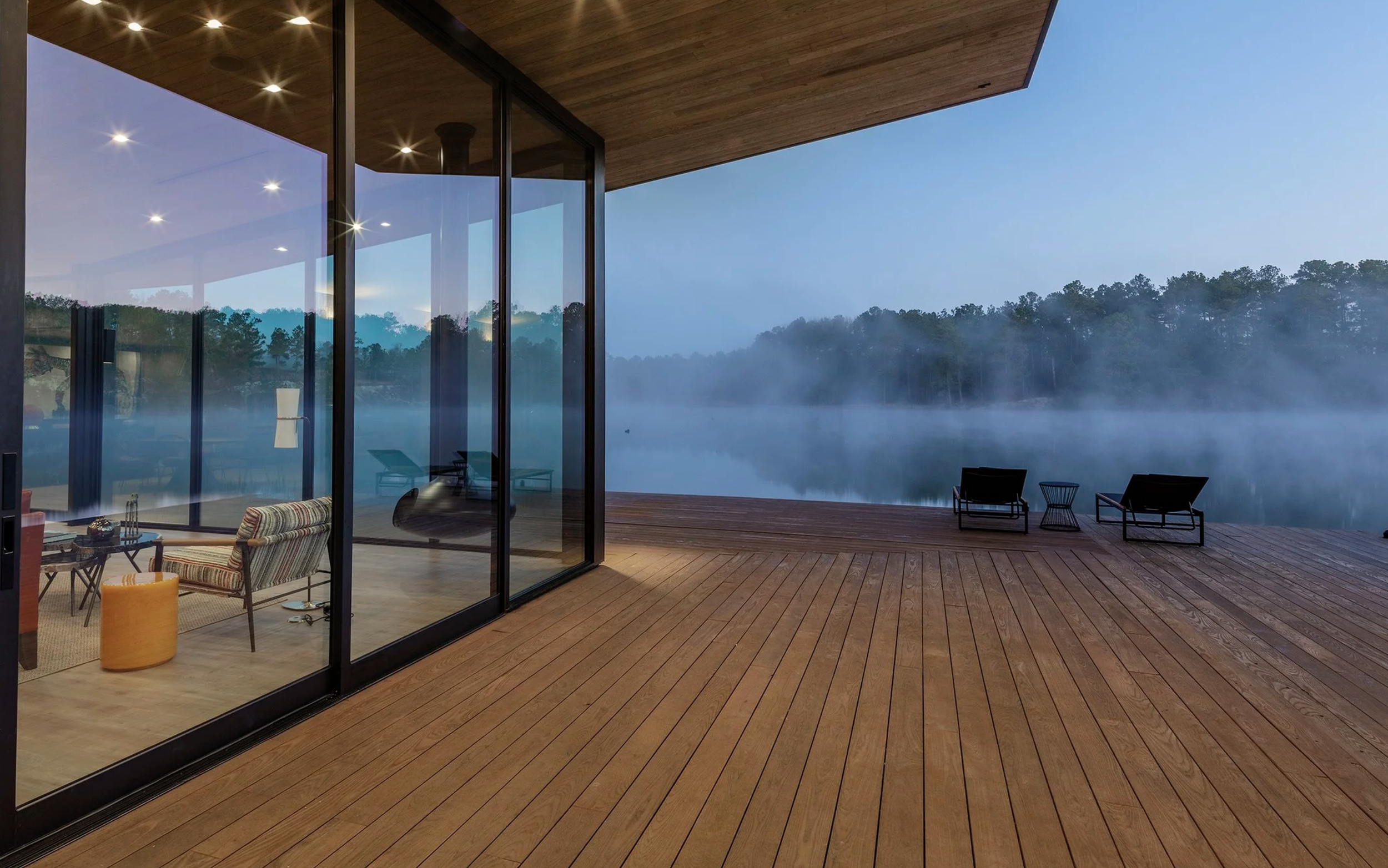
Thermally modified wood deck. Matched only by tropical hardwoods in natural beauty.
Best for: Homeowners who want a sustainable, stable natural wood option with a distinctive deep-toned appearance.
Thermally modified wood is produced by heat-treating lumber — typically ash, pine, or southern yellow pine — at very high temperatures (generally between 360°F and 430°F) in a low-oxygen environment. This process drives out the moisture and sugars in the wood that microorganisms feed on, fundamentally changing the wood's structure without any chemicals. The result is wood that is significantly more resistant to rot, moisture, and biological decay than its untreated equivalent.
The process also darkens the wood to a rich, consistent brown tone that many homeowners find extremely attractive. Brands like Arbor Wood, Cambia (by Horizon Wood Products), and Lunawood are among the more recognized thermally modified products available in North America.
Pros:
Dramatically improved rot and moisture resistance compared to untreated wood
Chemical-free process — an excellent choice for environmentally sensitive projects
Excellent dimensional stability — less swelling, shrinking, and warping in Seattle's wet climate
Rich, deep color straight from the mill — no staining required for the initial tone
Lighter weight than tropical hardwoods, easier to install
Often made from fast-growing, sustainably sourced species
Cons:
Thermal modification makes wood slightly more brittle — extra care required during installation to avoid cracking
The deep brown color will fade to silver-gray over time without UV-protective oil (which some see as a feature, not a flaw)
Less widely available than cedar or composite; may involve longer lead times
Not quite as hard or dense as tropical hardwoods like Ipe
Our take: Thermally modified wood is one of the most exciting developments in sustainable building materials, and it's particularly well-suited to Seattle's climate. The combination of chemical-free production, genuine weather performance, and beautiful appearance makes it a strong choice for homeowners who want something distinctive and responsibly sourced. It's a material we're seeing more and more on forward-thinking Pacific Northwest projects.
What About Deck Maintenance in Seattle?
Regardless of which material you choose, a few practices will significantly extend the life of your deck in the Pacific Northwest:
Clean annually. Moss, algae, and mildew love Seattle's damp conditions. An annual cleaning with a deck cleaner or diluted bleach solution keeps surfaces looking fresh and prevents biological growth from taking hold.
Inspect fasteners and flashing. Moisture finds its way into any gap or crack over time. Check where your deck meets the house each year, and address any compromised flashing or sealant immediately.
Allow for airflow. Decks that sit close to the ground with poor ventilation beneath them will deteriorate faster. Good airflow keeps the underside dry.
Seal natural wood as needed. Cedar and hardwood decks benefit from a quality water-repellent sealer applied every two to three years, depending on sun exposure and foot traffic.
Making the Right Choice for Your Seattle Home
The best decking material for your yard depends on your priorities — budget, aesthetics, how much maintenance you're willing to do, and the specific conditions of your property. A shaded north-facing yard in Ballard presents very different challenges than a sun-drenched South Seattle rooftop deck.
At Outdoor Oasis, we take all of these factors into account during the design process. We'll walk you through material options, show you samples, and help you make a decision that fits your vision and your lifestyle — not just a generic recommendation off a product sheet.
Ready to build your dream deck? Request a free estimate and let's start designing your outdoor oasis.
Outdoor Oasis is a Ballard-based landscape design-and-build company serving Seattle and the greater Seattle area. We specialize in custom decks, hardscapes, fences, and complete outdoor environments. Licensed, insured, and bonded.